Structured Data SEO: Your Shortcut to Rich Results
- Sparkz Marketing

- 20 hours ago
- 7 min read
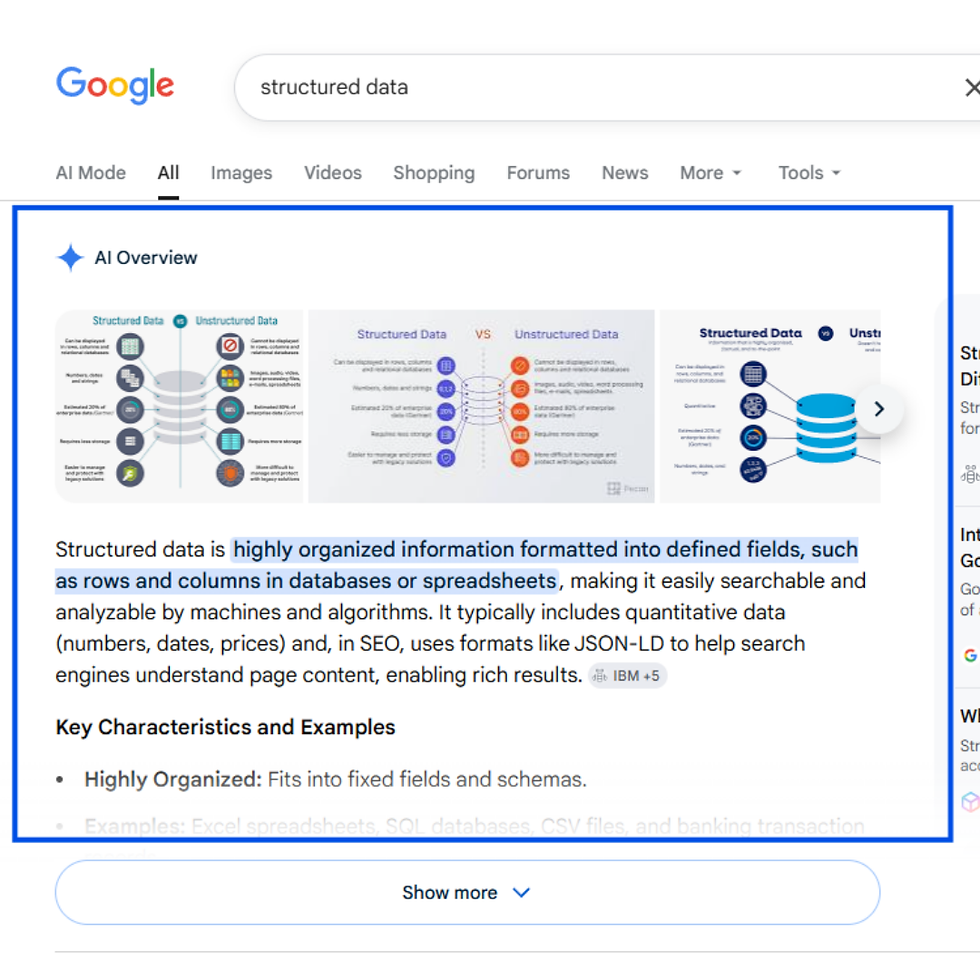
Think about the last time you searched for something on Google. Did you scroll through a list of blue links? Probably not.
You likely clicked on the answer that showed up right at the top, whether that was a quick fact, a star-rated business, or a step-by-step guide.
That is not an accident. Those results are earned.
They are called rich results, and getting your content there takes a specific approach called structured data SEO. It is one of the smartest things you can do for your Google SEO right now, and most businesses are still sleeping on it.
This guide will show you how it works, why it matters, and how to start using it today. We will also break down answer engine optimization, a must-know skill for showing up in search.
Let us dig in.
What Is Structured Data and Why Does It Matter?
Structured data is a way of labeling your content so Google can understand it clearly. Think of it as adding “name tags” to your content.
Without it, Google has to interpret your page on its own. With it, you’re explicitly telling Google what each element means.
That clarity is what helps your content qualify for rich results: the enhanced listings that stand out in the SERP.
These include:
Star ratings
FAQs
Recipes
How-to steps
Product details
They grab attention, improve click-through rates, and drive more traffic.
The most common implementation is schema markup, a standardized format search engines can read easily.
What Is Schema Markup and How Does It Work?
Schema markup uses a shared vocabulary called Schema.org. This vocabulary was created by Google, Bing, Yahoo, and Yandex working together. It gives webmasters a common language to describe their content.
Here are a few examples of what schema markup can describe:
• A product with a price and customer rating
• A recipe with cook time and ingredients
• An article with an author and publish date
• A local business with address and phone number
• A FAQ page with questions and answers
When you add SEO schema to your site, you are giving Google extra context. Google uses that context to build rich results in the search engine results page, also known as the SERP. This is the core idea behind SERP features optimization.
Adding schema markup does not guarantee rich results. But without it, you have almost no chance of earning them. Think of it as the entry fee to the game.
What Is Answer Engine Optimization?
Search engines are no longer just “search” tools. They’re answer engines.
Instead of listing links, Google often provides direct answers through:
Featured snippets
Knowledge panels
AI-generated summaries
Answer engine optimization (AEO) is about structuring your content so it gets selected as that answer.
This means:
Understanding search intent
Providing clear, direct responses
Writing in a way that’s easy for both users and algorithms to process
AEO and structured data SEO work best together:
Schema helps Google understand your content
AEO ensures your content is worth selecting
Together, they position you for maximum visibility.
Featured Snippets: The Most Valuable Real Estate in Google SEO
Featured snippets are the boxes that appear at the top of Google search results. They show a short answer pulled directly from a webpage. They are sometimes called Google snippets or position zero results.
Winning a featured snippet is huge. Your content appears above all the regular search results. Even if you rank in the fifth spot, Google can still pull your content into the snippet box and show it first.
Here is what Google typically uses for featured snippets:
• Clear, direct answers to common questions
• Bullet point or numbered list formats
• Short paragraphs of 40 to 60 words
• Content that matches the exact search query
Rich snippets SEO is slightly different from featured snippets. Rich snippets refer to the extra details shown within a regular search listing, like star ratings or price ranges. Both require structured data to work correctly.
To earn either type of enhanced listing, your content must be well-organized, clearly written, and marked up with the right schema.
Semantic SEO: The Foundation of Everything
Structured data is just one piece of the puzzle. To truly win in Google search, your entire content strategy needs to embrace semantic SEO.
Semantic SEO is about writing content that covers a topic fully and in context. It goes beyond targeting a single keyword.
Instead, it builds topical authority by covering related ideas, questions, and subtopics in a meaningful way. This applies to all types of content including blog posts, service pages, and landing pages.
Google has become very good at understanding meaning, not just keywords. It uses natural language processing to figure out what a piece of content is really about. Semantic markup SEO takes this into account.
Semantic markup SEO means using structured data along with naturally written content to signal what your page is about. When you combine good writing with proper schema, Google can understand your page at a deeper level.
Here are a few ways to build semantic SEO into your content:
• Answer common questions your audience is already searching for
• Use related terms and synonyms naturally throughout the text
• Organize your content with clear headings and subheadings
• Link to other pages on your site that cover related topics
• Keep paragraphs short and sentences easy to read
How to Win SERP Features with Structured Data

SERP features are all the special elements that appear on a Google results page beyond the regular blue links. These include featured snippets, local packs, knowledge panels, image carousels, video results, and FAQ boxes.
SERP features optimization is the process of targeting these spots intentionally. And structured data is your most powerful tool for doing it.
Here is a simple process to get started:
Step 1: Identify the Right Schema Type
First, figure out what type of content you have.
Are you writing an FAQ page? Use FAQ schema.
Do you have a how-to article? Use HowTo schema.
Selling products? Use Product schema.
There is a schema type for almost every kind of content.
Step 2: Add the Markup to Your Pages
You can add schema markup in three formats: JSON-LD, Microdata, or RDFa. Google recommends JSON-LD. It is the easiest to add and maintain because it lives in a separate script tag rather than mixed into your HTML.
If you use WordPress, plugins like Yoast SEO or Rank Math make adding schema much easier.
Step 3: Test and Validate Your Markup
Google provides a free tool called the Rich Results Test. Use it to check that your structured data is set up correctly. It will tell you which rich results your page is eligible for.
Step 4: Create Content That Earns the Spot
Schema alone will not win you rich results. Your content still has to be the best answer on the page.
Write clearly. Answer questions directly. Use lists where they make sense. Keep paragraphs short.
Also pay attention to your meta description. A well-written meta description tells both Google and the reader what your page is about at a glance.
It will not directly affect your rich results, but it does influence click-through rates, which Google notices.
Using Structured Data SEO to Boost Video SEO
Video content is one of the fastest growing areas in search. Google loves video. And with the right structured data, your videos can appear directly in search results with thumbnails and timestamps.
To optimize a video for search, use VideoObject schema. This tells Google the title, description, duration, upload date, and thumbnail of your video.
When done correctly, your video can show up as a rich result in both Google Search and Google Videos.
Here are a few tips for video SEO:
• Add a clear title with your target keyword
• Write a detailed description of what the video covers
• Add timestamps to help viewers and search engines navigate the content
• Host your video on YouTube and embed it on your website for double exposure
• Add VideoObject schema to every page where a video is embedded
Video SEO is still underused by many businesses. If you start now, you have a real chance to stand out in the SERP before your competitors catch on.
AI tools like ChatGPT or Gemini can help you brainstorm video topics and write descriptions, but always review and refine the output to make sure it matches your brand voice and is accurate.
Common Structured Data Mistakes to Avoid
Many sites add schema markup but still do not earn rich results.
Usually, it comes down to one of these common mistakes:
• Using schema that does not match the actual content on the page
• Adding structured data to low-quality or thin content
• Using outdated schema types that Google no longer supports
• Forgetting to test the markup with Google's Rich Results Test
• Marking up content that is hidden from users
Google is strict about this. Your schema must reflect what is actually visible on your page. If it does not match, Google may ignore it or penalize your site.
Putting It All Together
Winning rich results in Google is not luck. It is a strategy.
It starts with understanding what your audience is searching for. Then it moves to writing content that directly answers those questions. After that, you layer in structured data to help Google understand exactly what your content is saying.
When you combine answer engine optimization with strong schema markup and semantic SEO practices, you give your content the best possible chance of showing up at the very top of the search results page, in the spots that get the most attention and clicks.
It takes time and consistency. But the results are worth it.
Ready to Start Winning Rich Results? Sparkz Marketing Can Help.
At Sparkz Marketing, we help businesses like yours build smarter SEO strategies from the ground up.
Whether you are just learning about structured data or ready to take your SERP features optimization to the next level, we are here to guide every step.
From schema markup setup to full answer engine optimization strategies, our team knows how to get your content seen in the right places at the right time.


Comments